
Impartner: AI powered PRM redesign
Customers asked when Impartner would use AI. We tested it in pieces then redesigned PRM from the bottom up.

The problem
Partner marketing is complicated. Impartner's PRM helps large companies run marketing across networks of resellers and partners. The legacy product was hard to navigate, and the teams who used it needed help.
Customers wanted AI. Competitors were moving. PartnerStack already used AI to analyze partner flows and partner data.
Partner marketing teams wanted help.
What I started with
Direction
Three AI efforts moved in three directions. News on Demand, RAG search, and deal generation each built its own version of AI.
Usability
The legacy product was hard to use and hard to navigate.
Data
Partner data lived in PDFs and in documents from many projects. Much of it was out of date.
Trust
Users did not know what AI would do with their deals and negotiations.
Who it serves
Partner marketing teams
Run complicated programs across many partners. They need help planning, executing them and identifying outliers.
Account managers
Need to see which partners perform well and which fall behind — who to encourage and who to reward.
Partners
Need content customized to them, in their own language. Impartner's customers operate internationally, so translation matters.
Three attempts
Attempt one: Voice to Deal
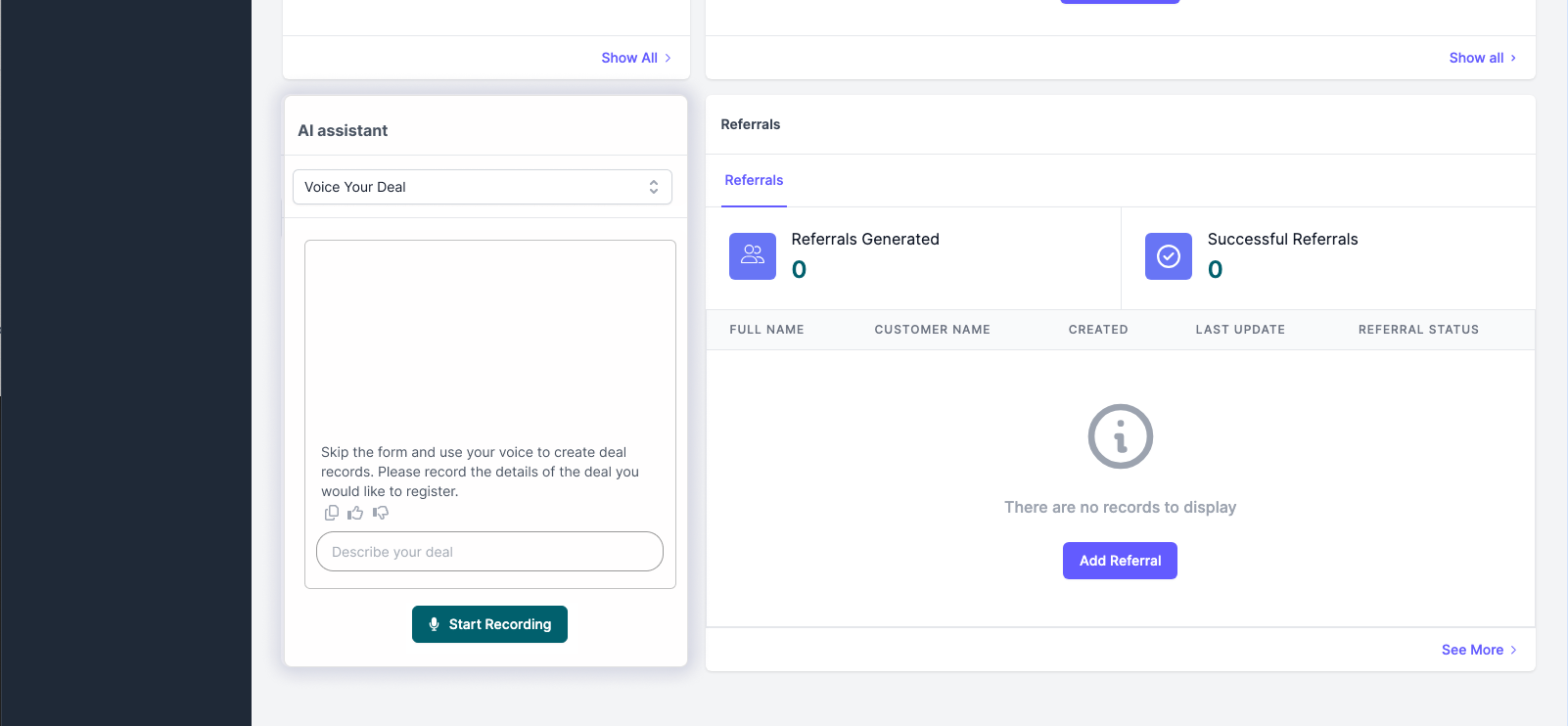
We placed AI in a home-page widget called Voice to Deal. The title did not say it was AI. The name suggested you could run deals by voice. Users were nervous. They could not tell how it would affect the deals they were creating or already running. Starting a deal with AI also replaced a simple form, so the risk outweighed the reward. Adoption stayed low.
Attempt two: News on Demand
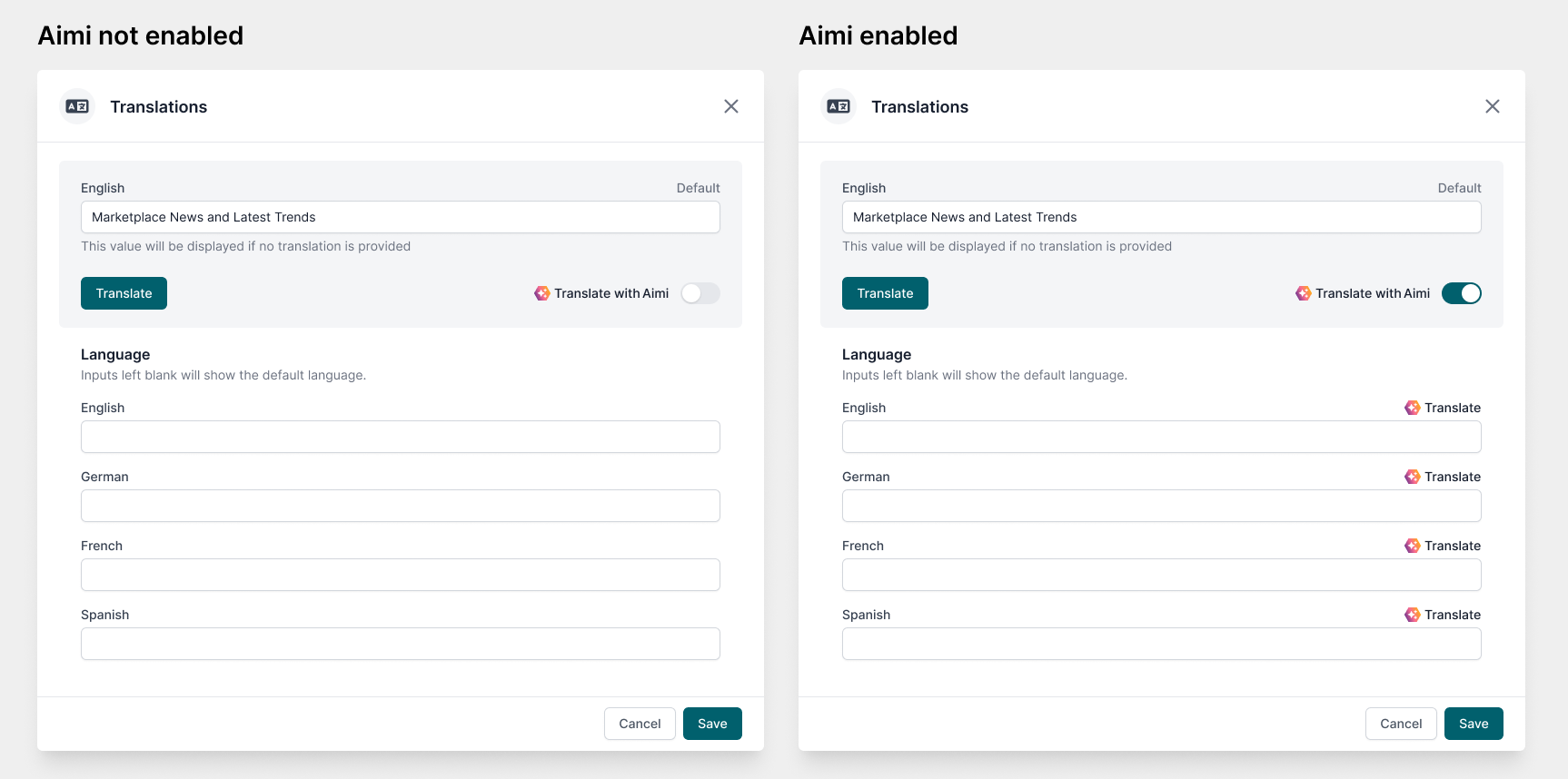
News on Demand is a legacy tool that got an upgrade. Companies use it to build newsletters and tailor the content each partner receives. Because the product runs in many countries, translation mattered. The team added AI to the article writer and used AI to translate articles. Users could edit the draft, rewrite it, or write their own. A mistake cost little, and adoption grew faster than it had for Voice to Deal.

Attempt three: RAG search
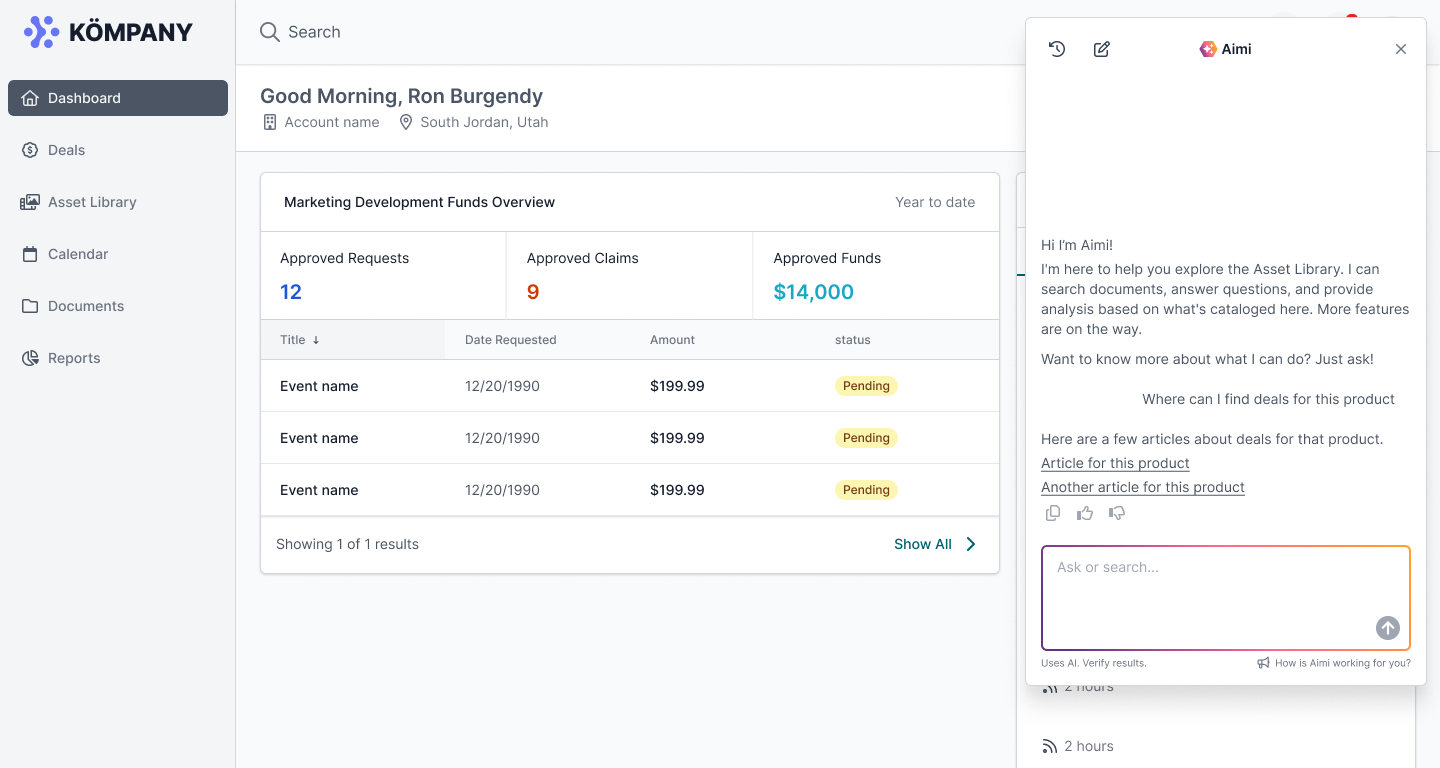
Nearly everyone we talked to raised the same problem. The product was hard to use. We built a RAG search initially as in-app help. It drew on Impartner's database to show people how to use the software and how to run partner marketing well.
Our data was the first hurdle. It came from many projects run by teams that did not coordinate. Much of it sat in PDFs, and much of it was out of date.
We checked the partner and company data next. Their data was as messy as ours. We added rules to onboarding and ranked answers by upload or change date. We also added flows for identified wrong answers and sources. That reduced conflicting answers, but gaps remained. Users also asked the help panel to do tasks it was not trained for. The responses were clear, but the narrow scope made the feature look more limited than it was. RAG gained momentum slowly. We eventually placed deal inspection into RAG. We abandoned Voice to Deal.
What the data taught us
Account and partner insights were the best customer-facing place to start. The data could not support them yet. Insights built on poor data would have been wrong, and wrong insights would have cost trust. Better partner onboarding and deal flows would generate the data we needed. Building that path became the redesign's job.
Our team fought for the data work from the start. It lagged behind the interface and the AI. No AI tool or interface mattered until the data improved.
The redesign
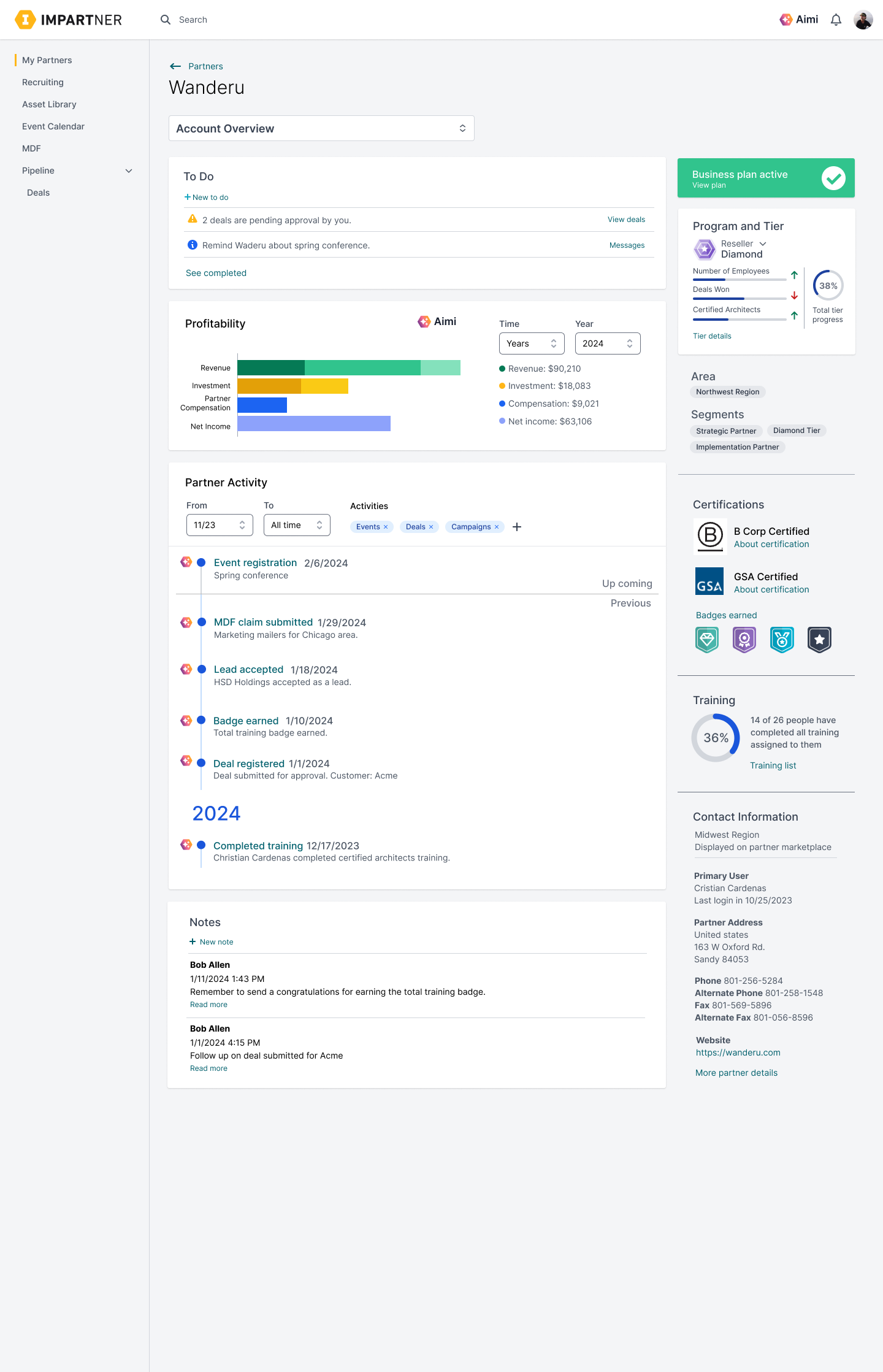
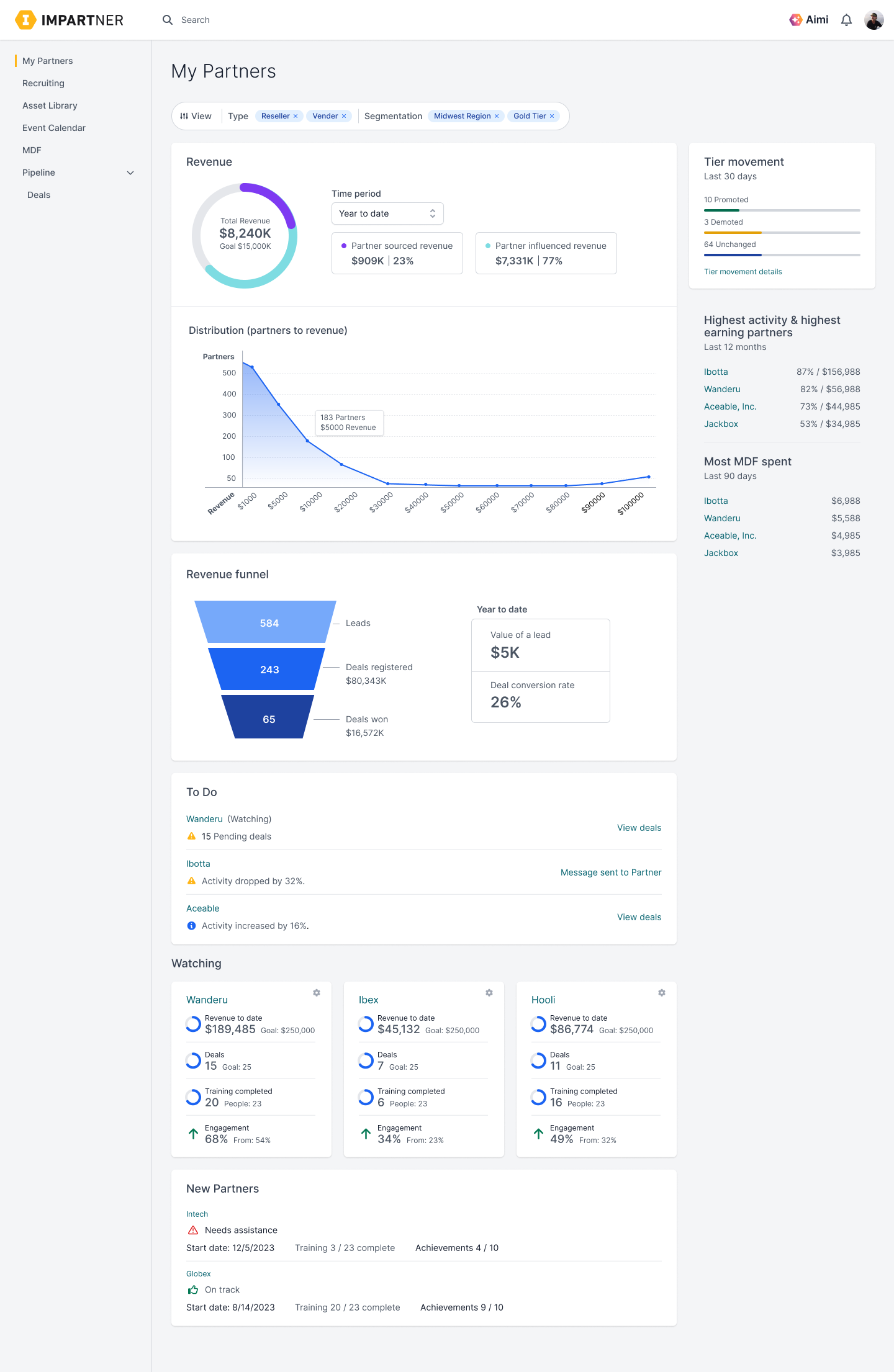
Leadership approved a full redesign of PRM. I led the research, initial strategy and design phase with my UX team, the research team I built, and product managers from different teams. AI was built in from the start, and the work drew on what the three attempts taught us. The redesign was approved and handed off. The final product is not deployed yet.
Coordination
Coordination failed first. News on Demand, RAG search, and deal generation moved in different directions. Deal generation started with my involvement and then went its own way. A workflow and agent experiment ran alongside them, and I led it as an open experiment. I started by bringing the team leads together. Those conversations became an official group, and the group became AIMI.
The decisions
Voice to Deal
- Options
- AI-first deal creation, or keep the form.
- Gave up
- A simple form path for starting deals.
- Why
- We chose AI-first, and the highest-stakes task became the first AI experience. Users did not trust it.
News on Demand
- Options
- Full automation, or AI as an editable draft.
- Gave up
- Full automation.
- Why
- Users could edit or replace the output, so mistakes cost little.
RAG search
- Options
- Broad partner and company data, or help content only.
- Gave up
- The broader scope.
- Why
- Partner marketing teams asked for help. Help was the most realistic place to start. Later it would expand to other uses with many agents working together.
Data rules and recency ranking
- Options
- Wait for clean data, or launch with rules and ranking.
- Gave up
- Clean data before launch.
- Why
- Waiting was not an option. Ranking by date reduced conflicts.
Account and partner insights
- Options
- Launch the insights now, or wait for better data.
- Gave up
- Early, visible AI for account managers.
- Why
- The data was not ready, and bad insights would have cost trust.
How I worked with engineering
I defined the RAG requirements with engineering: the data sources, the priorities, and the boundaries around customer data for privacy and accuracy. I stayed close to the technical decisions so the implementation would produce the experience I had designed.
I coordinated with the engineers, UX designers and PM’s on the other teams building AI through weekly update meetings, a teams chat and personal calls. This enabled us to deliver a unified, cost effective AI tool for our customers with consistent pricing.
What I would do differently
Fix the data first
We fought for the data work, and it lagged behind everything built on top of it. I would make data readiness a gate before any AI feature launches.
Start with the lowest-risk AI
Voice to Deal put AI on the highest-stakes task. News on Demand showed that drafting and translating were a better place to start.
Organize AI across teams from the start
News on Demand, RAG search, and deal generation drifted apart in appearance, foundation and functionality. I would bring the leads together on day one, not after the directions had split.
Get leadership support earlier
Team leads started the conversation. Leadership backing came later. I would bring leadership in before the first AI efforts began.
The outcome
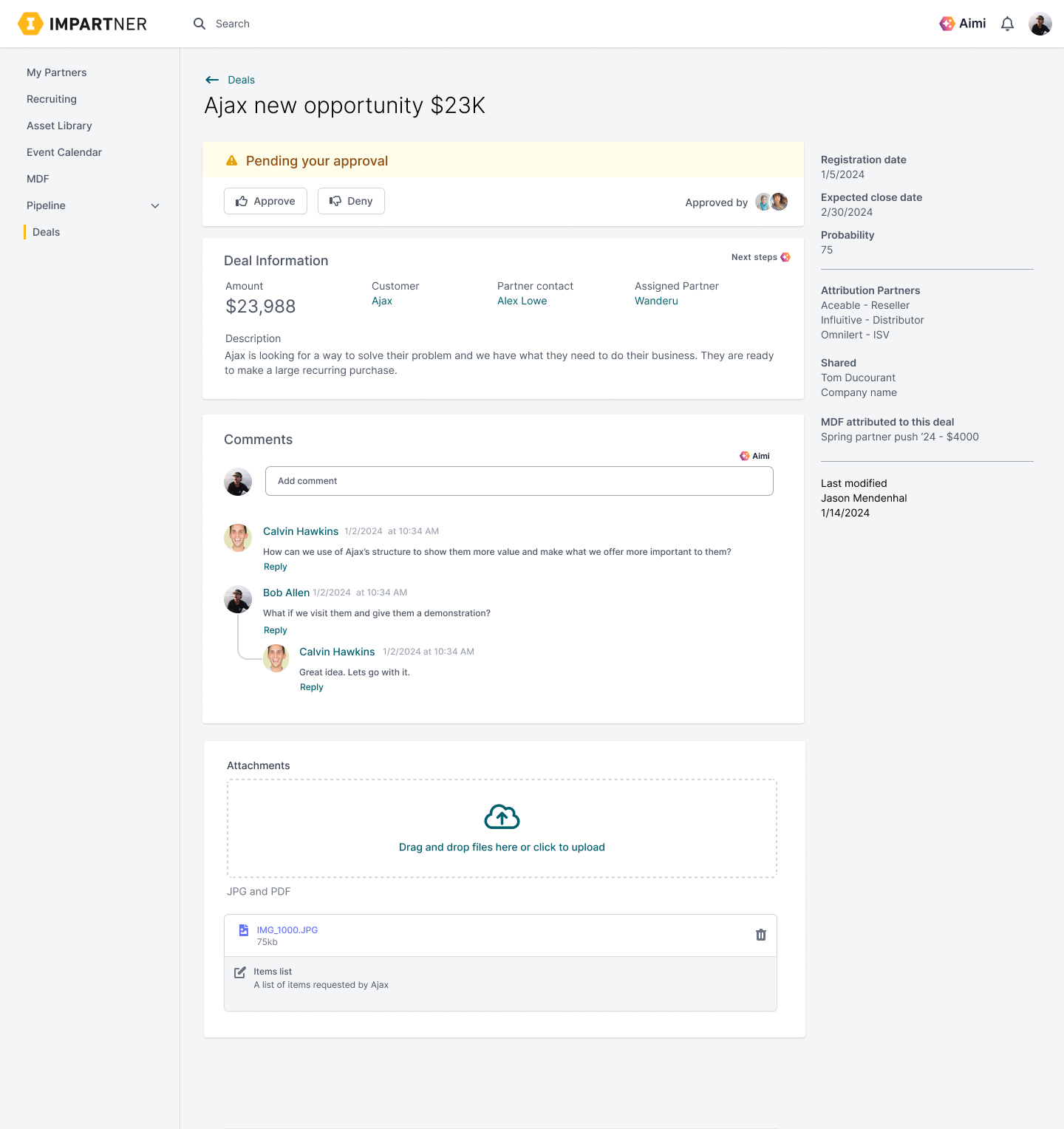
News on Demand adoption grew faster than Voice to Deal. RAG search started slowly and grew over time. AIMI now runs as a proof of concept across older and newer features in the legacy product as a unified AI assistant. The redesign was approved and handed off. Its team started from the work I created.
Building something that needs a clear map? Let's talk.
Tell me where the route got unclear. We'll find the way together.