
Huro Healthcare Staffing Platform
The founders needed someone they could trust to build their software. I took a stalled build and turned it into four live applications.

The problem
They had a real business connecting qualified healthcare contractors with the facilities who need them. A development firm quoted the build at $500,000. The founders paid $40,000 up front. Five months later, they had no working software and no clear timeline. The contract also said the firm would own the finished product, and Huro would license back software it had already paid for.
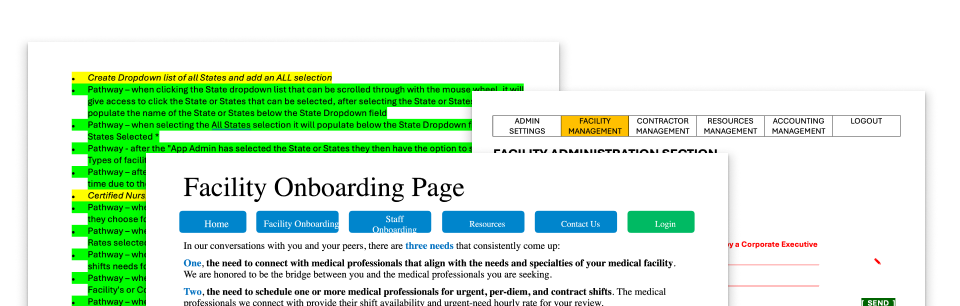
Huro walked away. They had a stack of Word documents and a PowerPoint prototype. The users were defined as nurses and healthcare professionals. The needs behind the product and the roles it would require were not defined yet.
What I started with
The build was stuck for reasons that had little to do with code.
Three very different groups would use the platform, plus an internal operations role. No engineering team, however skilled, could know what to build first.
The previous firm never received the documents. It received a summary and started building. The software it produced probably looked little like the founders' vision. Until someone closed the gap between the idea and the product, every dollar spent on engineering bought the wrong software.
The founders had lost trust in outside builders, and they had no internal team to check the work. My first job was to work out what needed building and in what order, before I built anything.
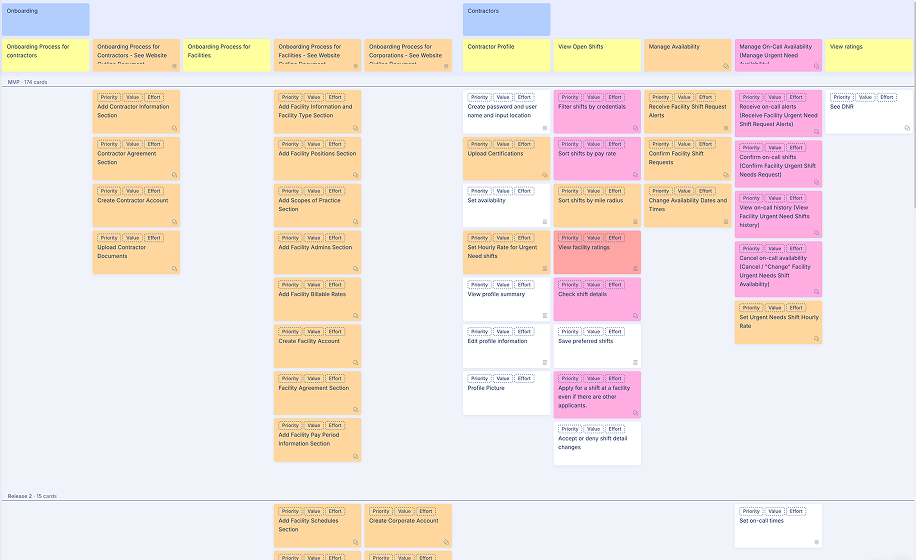
Some word documents and a powerpoint is what they had. We turned them in to a working user story map that became a road map, user stories, and a release plan.
Who Huro serves
Huro needed to serve four groups. Each one had a different reason to join.
Healthcare professionals
Want shifts that fit their credentials. Many had been burned by platforms that matched them to the wrong jobs and confirmed shifts that didn't exist.
Facilities
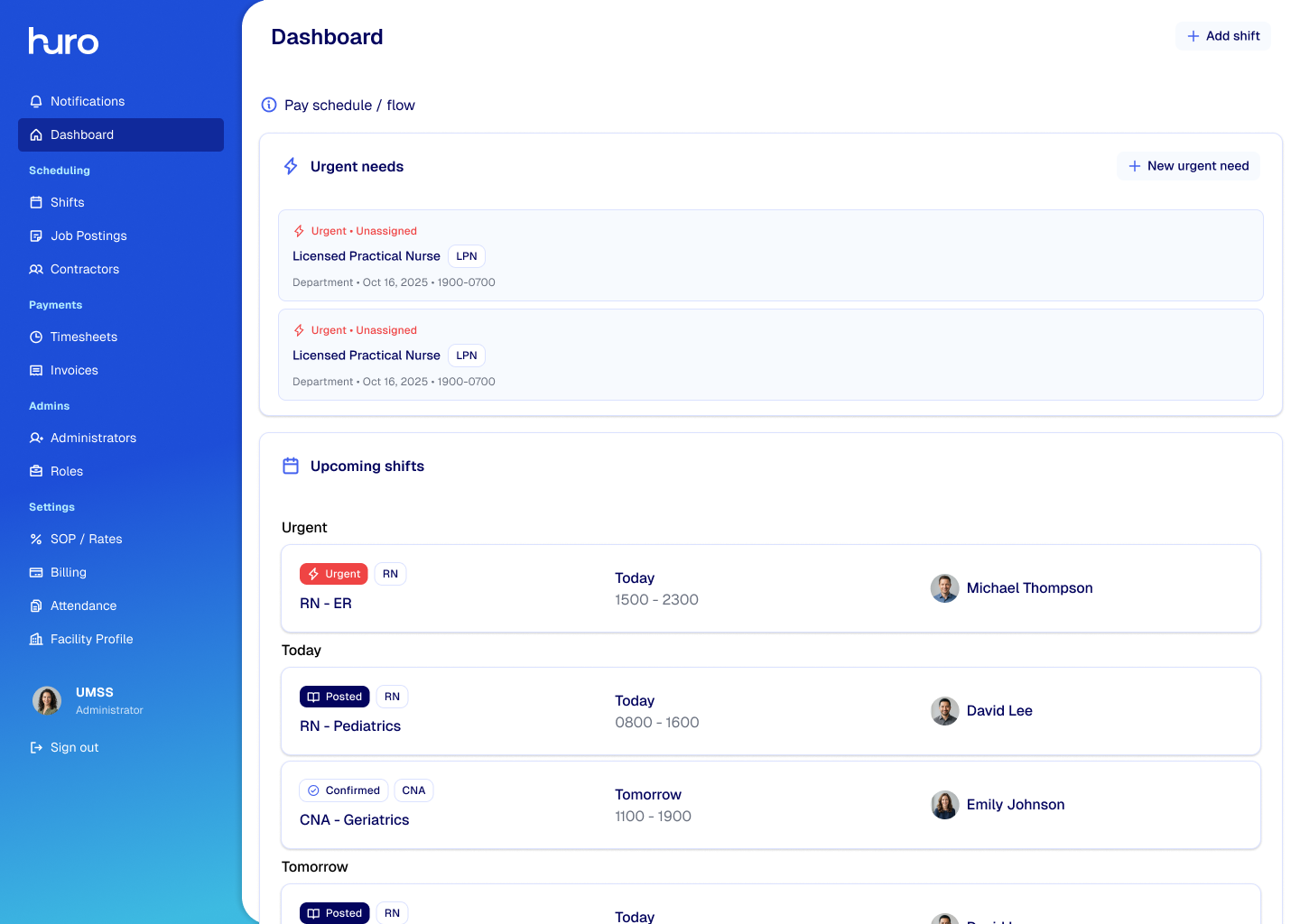
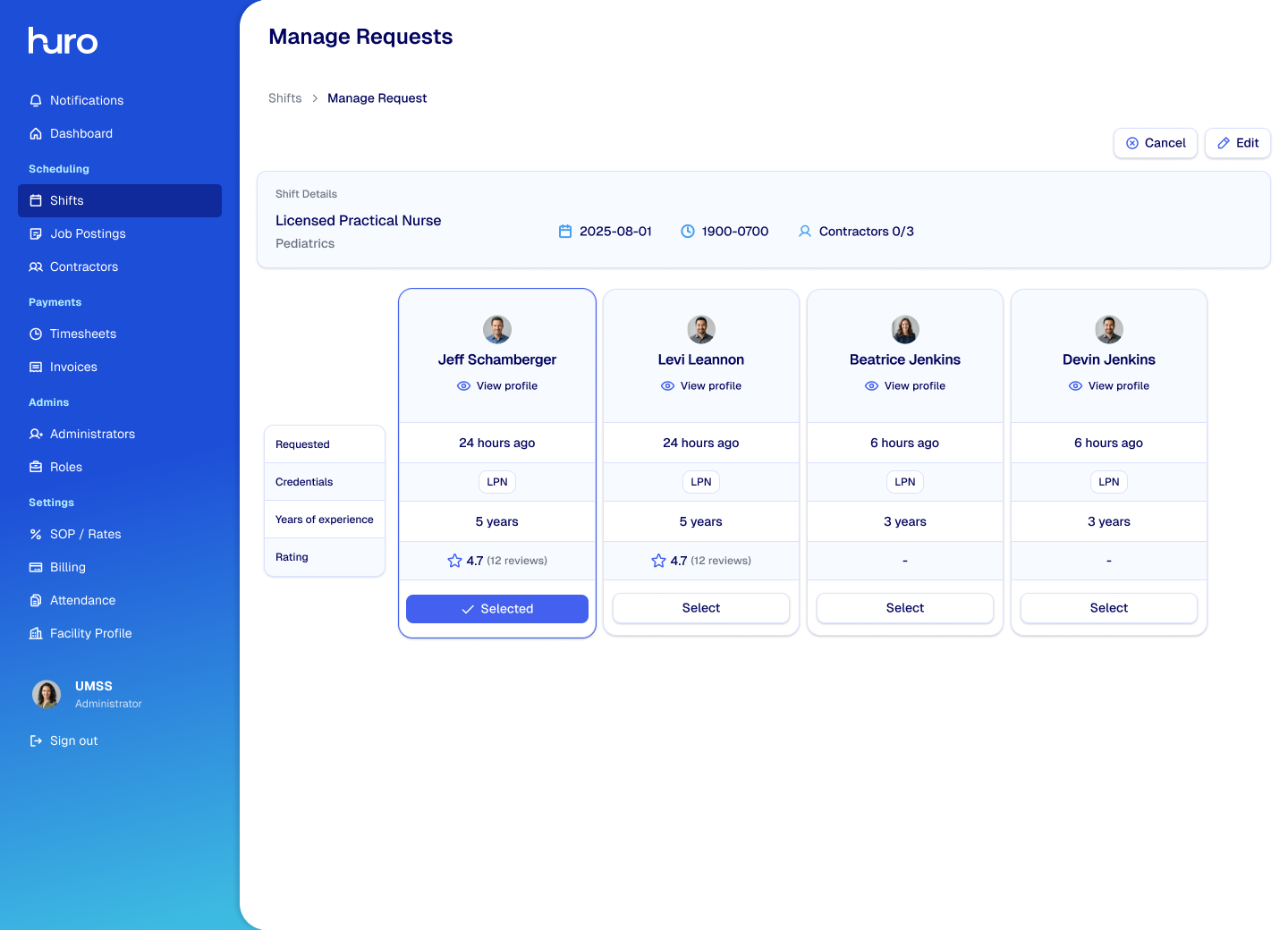
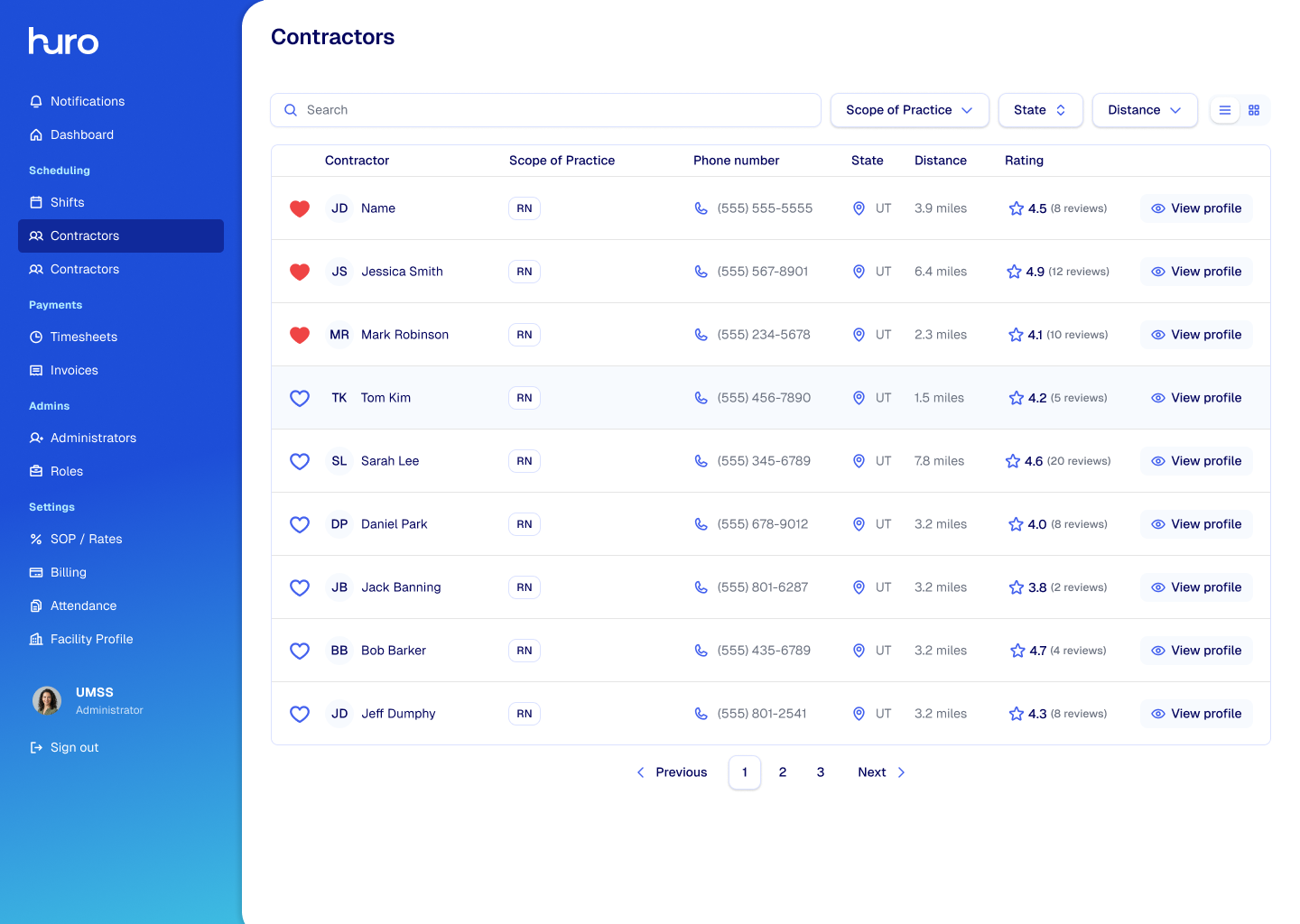
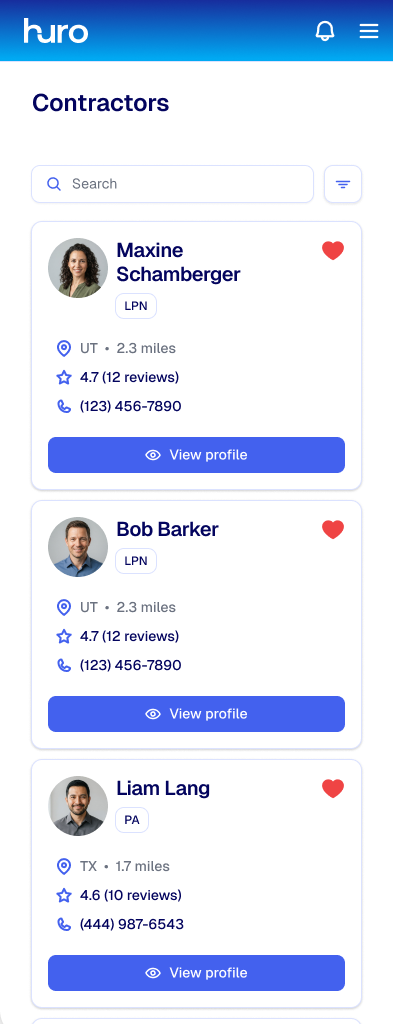
Want to see every available contractor in their area. They have a hand full of contractors they trust and want back repeatedly. Most competitors do not allow this.
Corporations
The multi-facility corporations want one view across their sites and one place to pay.
Huro operations
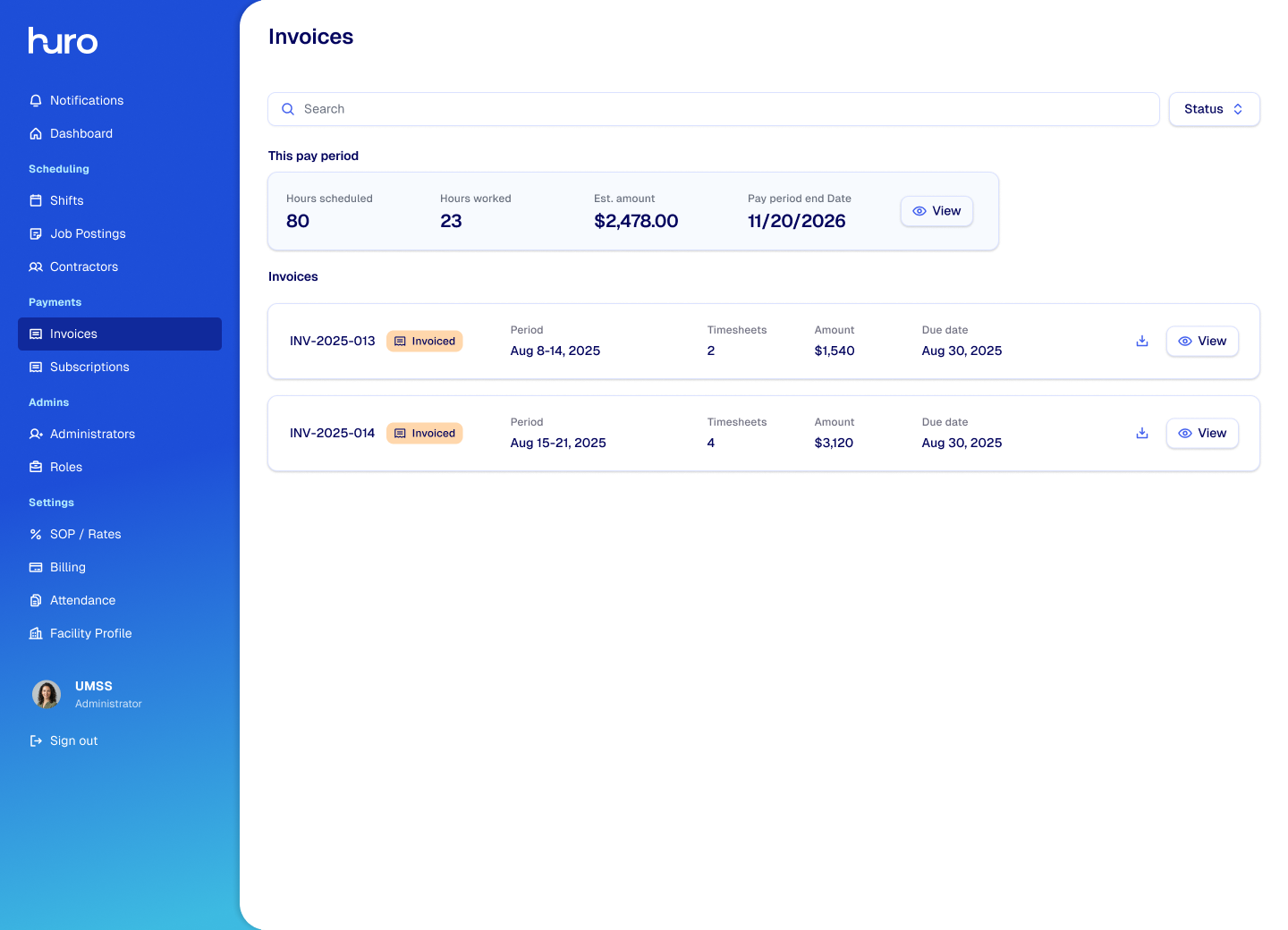
Need invoices, activity monitoring, and platform oversight.
Huro earns in two ways. Subscriptions carry the margin. Weekly transaction invoices cover each shift worked.
Competitive advantage
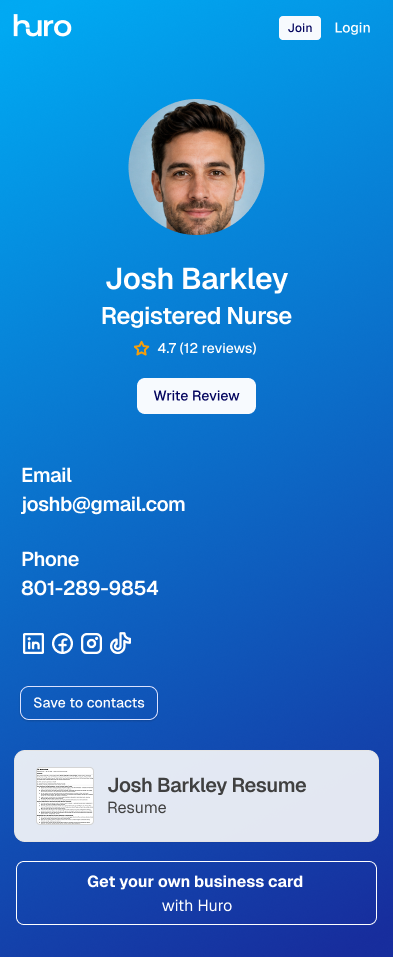
Nursa and Medly compete for the same facilities and contractors. Huro wins on three points. Facilities see every available contractor in their area. The first release has no AI matching, and professionals told us they did not want AI deciding their shifts. Sign-up builds trust before it asks for sensitive information. Professionals also earn when the friends they bring onto Huro work a shift, and reviews invite new users in.
Facilities contact the specific professionals they like, on a regular basis. No competitor offered this.
Huro also wins on price. Nursa, Clipboard, and Medly have large development teams and charge by the hour. Our team is small, so we charge a subscription that costs much less and still keeps a healthy margin. Moderate and heavy users save thousands of dollars each month.
| Comparison | Huro | Nursa | Medly |
|---|---|---|---|
| Contractor visibility | Every available contractor is visible and can choose only 1 to send a shift to if desired. | Can only see contractors who apply to shifts. | Can only see contractors who apply to shifts. |
| AI matching | None in the first release | None after trying it and dropping users. | Some but it is limited. |
| Onboarding | Trust first, sensitive details later. Least friction | Some trust first with more sensitive information later. | All information up front |
| Referral loop | Professionals earn when their network works a shift | Referral but no reward. | No referrals built in. |
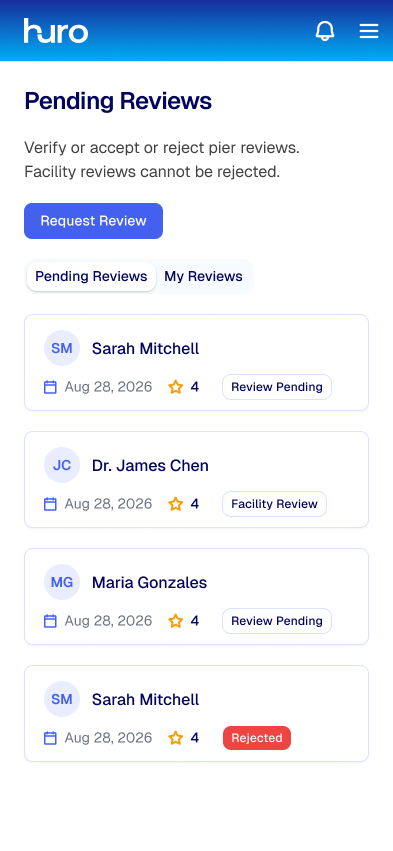
| Reviews Look | Contractors receive reviews and can ask for reviews. If reviewer is not in the system and reviewer joins the contractor gets referral credit for that member. | Reviews are available but limited. | Reviews are available but limited. |
| Reliablity | If shift is canceled 12 hours before shift starts the contractor still earns half. | Contractors are arriving at shifts that have been canceled but not reported in app. | Reviews are available but limited. |
| Cost and payment structure | Tiered subscription much less than traditional hourly commission. | Hourly commission. | Hourly commission. |
Plan and build
Problem
The team needed a spec it could build from, and nobody owned the decisions behind it.
Research
I moved the founders' documents into a StoriesOnBoard story map and brought the founders into it. The map forced an order of work, exposed gaps, and gave the founders a way to contribute that produced usable output. Collaboration workshops followed. Founders, developers, and designers worked through the hardest flows in the same room. Credentialing verification and shift management came out of those sessions. Nurses and facility administrators tested the contractor and admin experiences before final designs.
Hypotheses
Interface concepts from Claude Code, Lovable and Figma Make would expose ideas the documents missed. Matching, screening, and shift recommendations would drive engagement. A referral loop would bring professionals in through their own networks.
Tradeoffs
We left AI features out of the first release. We handed payments to Stripe instead of building them. Background checks went to Checkr for the same reasons.
Outcome
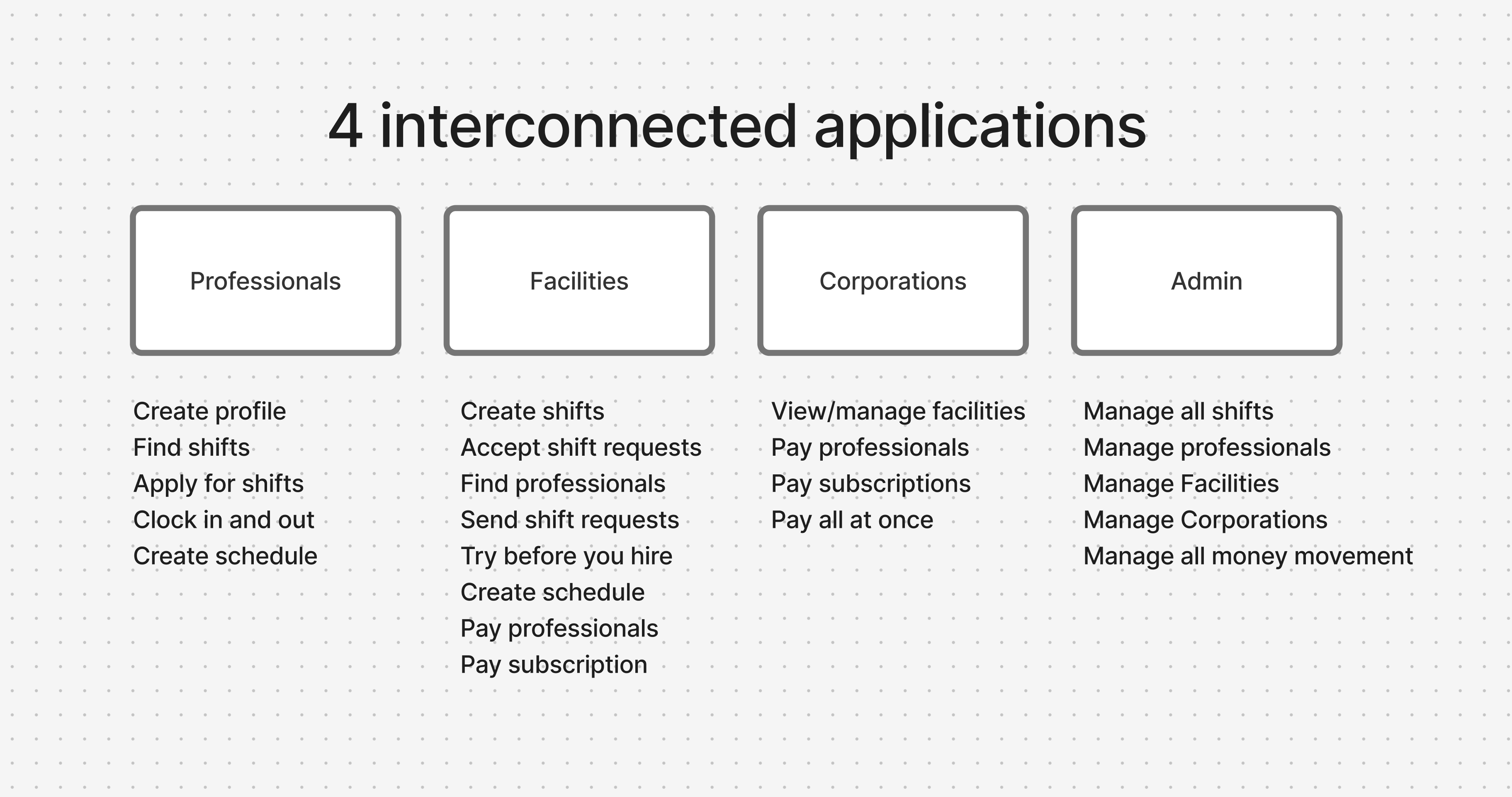
Four interconnected applications launched. Facilities and contractors now transact on the platform.
Decisions and Trade-offs
The calls that shaped the product, with what each one cost.
No AI in the first release.
- Options
- Ship matching and screening, or hold them.
- What we gave up
- Early AI efficiency and marketing
- Why
- Professionals had been frustrated by matching platforms in hiring and in medical medical applications. Facilities wanted visibility, not automation. I talked with competitors who added AI then removed it after usage drop. I brought that evidence to the founders, and they agreed. AI features are still planned and we are using data to know exactly how to use it.
Sign-up order.
- Options
- Collect financial and licensing details at sign-up, or later. Chose later.
- What we gave up
- A complete profile on day one.
- Why
- Contractors and admins needed see the platform before they share sensitive information. Moving the step later affects conversion and retention.
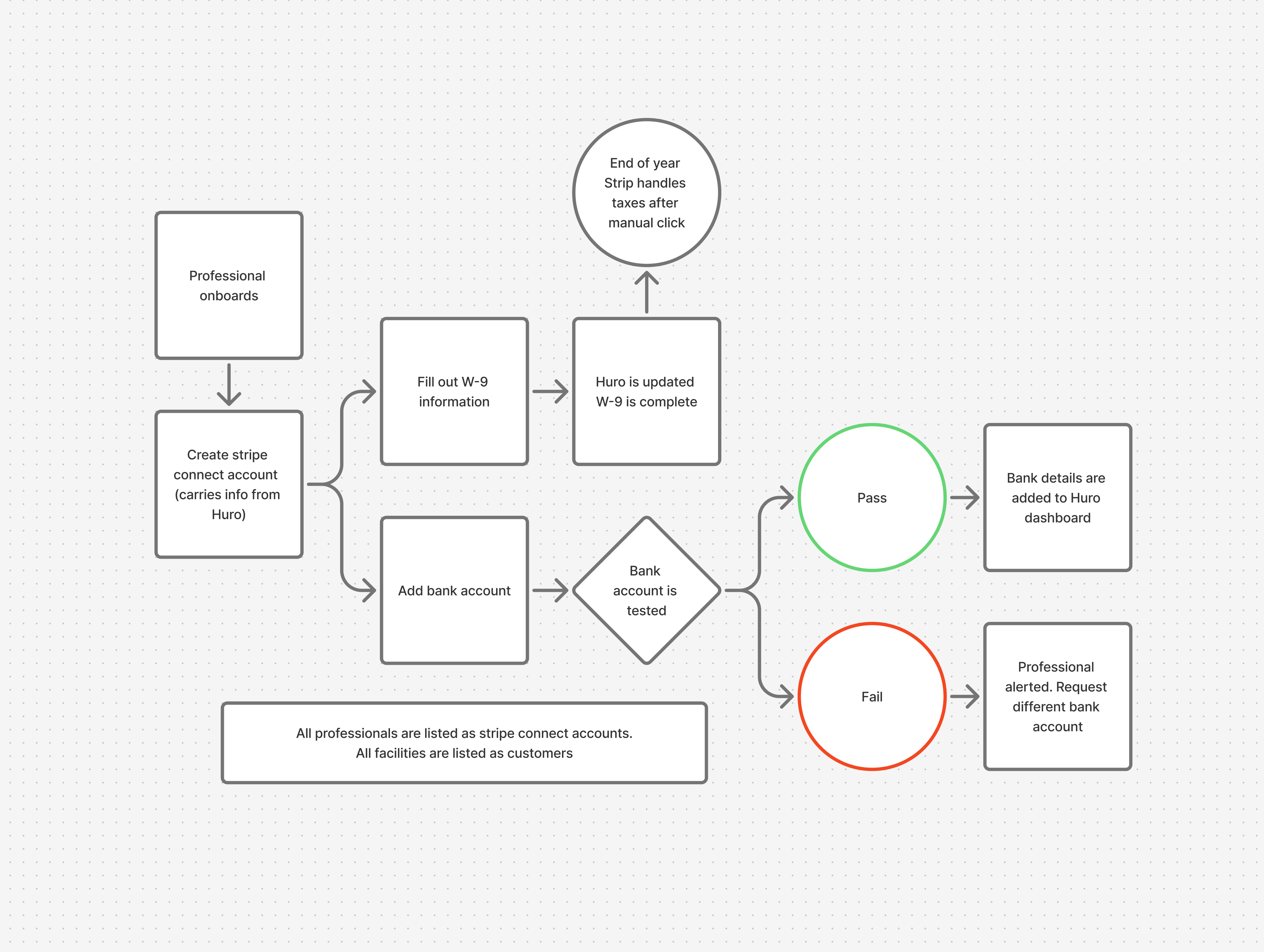
Stripe for payments and W-9 collection.
- Options
- Build payment handling and tax forms ourselves, or use Stripe Connect Express or a competitor. Chose Stripe.
- What we gave up
- Control over the payment flow.
- Why
- Stripe carries the liability, handles W-9 collection with contractors, and offers pay-as-you-go pricing that suits a company starting out. It also removed the payments build from scope, so the team needed fewer developers.
Checkr for background checks.
- Options
- Build background check flow, buy it, or make facilities do their own. I chose Checkr.
- Why
- We have a small team and we need to get to market quickly. We are not in the background check business. They have an API that integrates well and will produce reports we can make available in the right conditions.
4 separate applications.
- Decision
- Chose four apps. Each user group gets a product built for its own purposes. Easier transition to mobile native applications for 2 of them. Next iteration will combine facilities and corporations into 1.
How I worked with engineering
Healthcare staffing has rules nobody can infer. Credentialing, shift approval, payment timing, and compliance all had to be written down. I wrote full PRDs for all four applications and the user flows. AI helped with scaffolding. I edited and wrote the content.
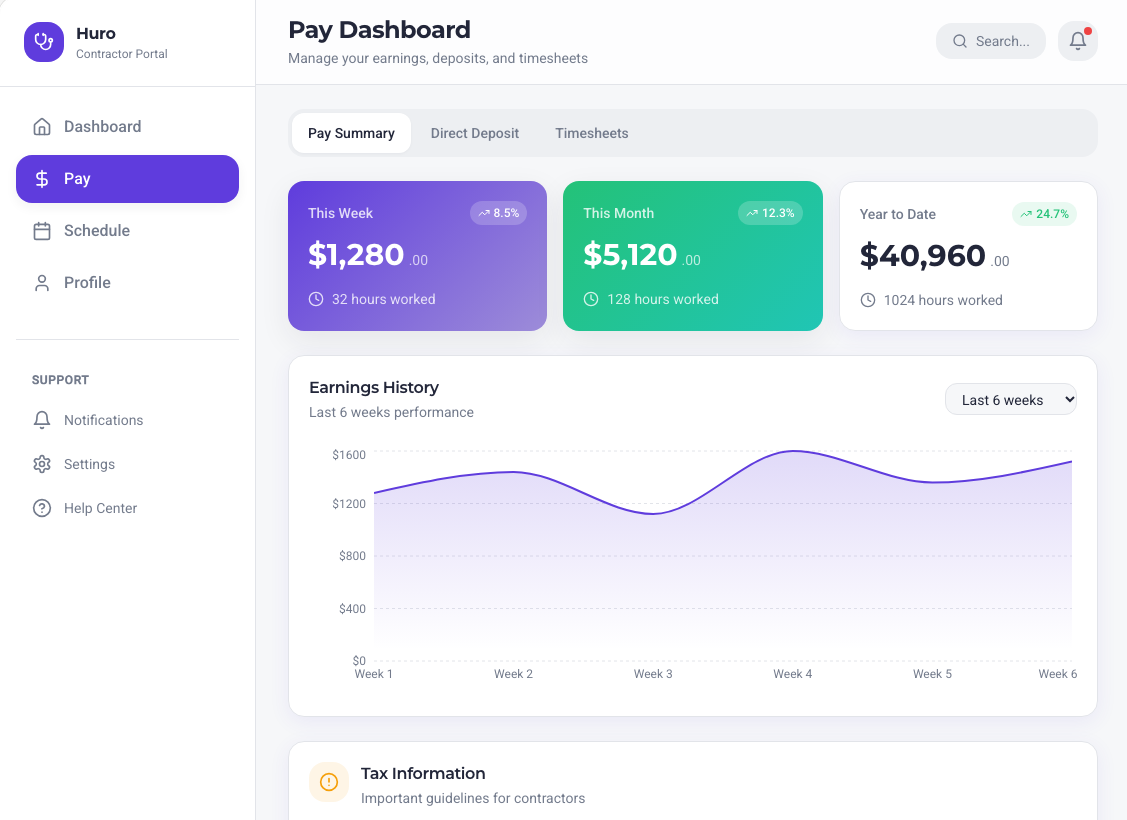
The Figma design and AI prototypes became the spec. My backend developer generated and inspected code directly from the PRDs and prototypes, so the spec drove the code.
The AI tools in the workflow included Claude Code, Copilot, StoriesOnBoard, Gemini, Figma, ChatGPT, Lovable, Claude Design, Stories-on-Board, and Locofy.
I ran sprint planning, built and prioritized the backlog, and reviewed quality across the build.
What I would do differently
Vet every vendor claim before the build depends on it.
Early on, a representative assured us QuickBooks supported automatic payments and the API documentation was not specific in that area. It did not. We found out mid-build. I would now require proof of concept on high risk features before moving forward.
Combine the facility and corporate apps.
I split them early because they seemed to want different things. By the middle of the build, they worked better as two views of the same data. Today I would start with one data model and build two views. AI has also made that integration work far faster than it was.
AI has matured
We tested many AI tools to plan, prototype, build, design with including Lovable, Locofy and others. At the time integrations was a real challenge for AI. Figma to code tools were still very much in beta.
Now I would:
- Prompt the specifications using Claude and have AI build in Figma using the design system that exists in the repository and in Figma. Make adjustments in Figma then push designs back into Claude code and so it can build the front end according to the design system we created also using Claude Code and Figma.
- There is an argument for using Claude Design, however that requires a more disjointed workflow to get from design to prod code.
- Integrations, back and code reviews can be handled with experienced developers and Claude code.
The team and the company
Problem
Huro had no team of its own, no working process, and no reason for the founders to trust a new team.
Research
I ran a workshop to deeply understand what the founders needed and where the gaps were in their understanding what medical professionals and facility admins needed. We filled those gaps and gained an understanding of what the product is and isn't.
Hypotheses
A smaller AI enabled team with a clear spec and one accountable product owner would ship faster and more reliably than the previous firm did.
Decisions
I contracted 1 US backend developer, 1 designer, 2 frontend developers and 1 QA. I recruited and onboarded most of them through my LATAM partner. I built the roadmap, ran the sprints and the backlog, created prototypes, screens and flows.
Tradeoffs
A distributed team needs written specs and a steady sprint rhythm more than a team in one office does. I owned the product decisions along side the founders. I made each decision visible, with its options and tradeoffs, so we chose with the full picture.
Outcome
Huro has a live platform, a roadmap for version two, and a team that knows how to ship and maintain it.
The outcome
Huro has launched . Four interconnected applications are live. Facilities and medical professionals transact on the platform. We delivered the full build with a team I recruited and managed from start to finish.
The founders went from a stack of documents and a bad first experience to a live platform. The trust they lost in the first build was rebuilt.
Building something that needs a clear map? Let's talk.
Tell me where the route got unclear. We'll find the way together.